

Overview
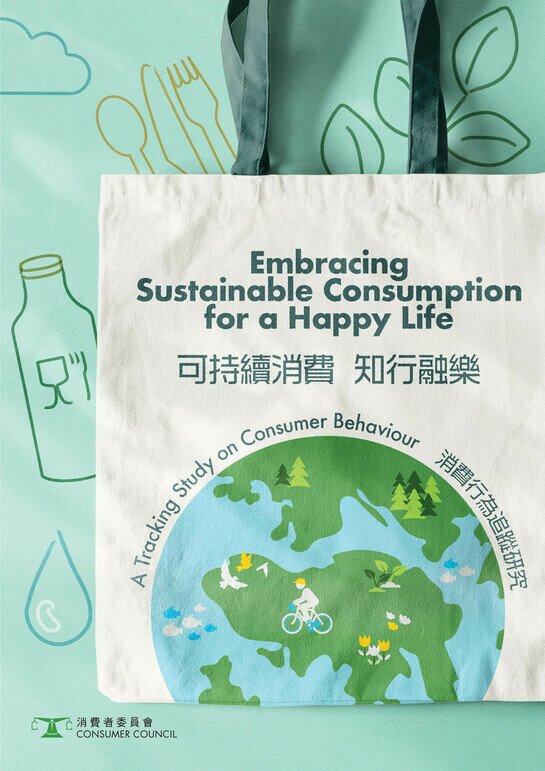
As economies around the world accelerate efforts to achieve carbon neutrality and sustainable development, sustainable consumption (SC) has become increasingly recognised as a critical component of addressing climate change, resource depletion and environmental degradation. Achieving the Hong Kong SAR Government’s commitment to carbon neutrality by 2050 - and its interim target of reducing carbon emissions by 50% before 2035 against the 2005 level - calls for the concerted efforts of consumers, businesses and the Government. Promoting SC has long been one of the Consumer Council’s (the Council's) priorities.
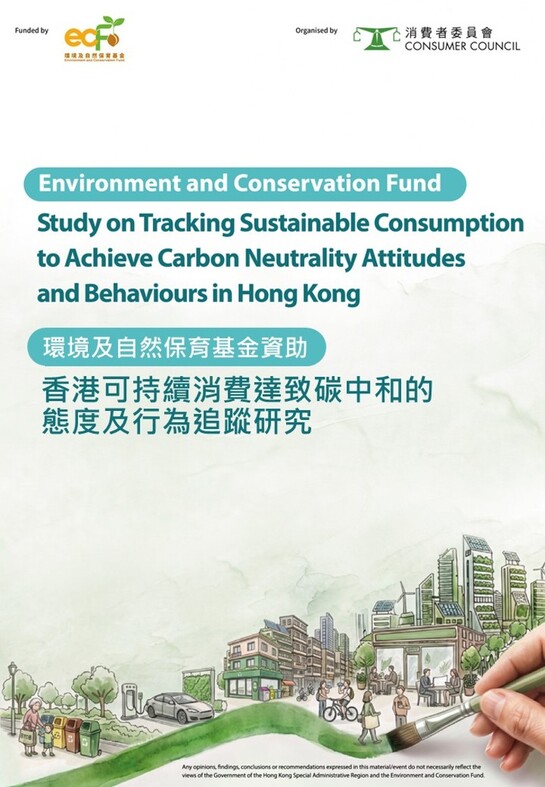
Funded by the Environment and Conservation Fund (ECF), this third issue of the Council’s SC tracking report - “Environment and Conservation Fund Study on Tracking Sustainable Consumption to Achieve Carbon Neutrality Attitudes and Behaviours in Hong Kong” (“the Study”) - is the first of its kind to track Hong Kong consumers’ awareness, attitudes, behaviours and readiness towards sustainable consumption, a decade after the 2015 baseline survey.
Key Findings
The Study adopted a mixed-method approach, comprising a consumer survey through street interviews with 1,007 respondents; six focus group discussions with 30 participants; a trader survey covering seven supermarket and personal care chains and local e-commerce platforms; desktop research on global SC trends and relevant policies; and post-study engagement with the Government, public bodies, utility companies, trade associations, sizeable business groups, green groups and academia.
- The Sustainable Consumption Index (SCI) continued to improve: the Awareness and Attitude Index rose from 74 in 2015 and 77 in 2020 to 79, while the Behaviour and Readiness Index climbed from 67 in 2015 and 71 in 2020 to 72.
- Despite growing awareness, an awareness-to-action gap persists. High cost, insufficient product information and limited supply remain major barriers, and effort-intensive or lifestyle-changing behaviours are largely rejected. By contrast, low-effort measures offering immediate and economic benefits (e.g. savings and rewards) are the key drivers of green practices.
- Close to one-third of consumers can be classified as “High Action Consumers” - predominantly aged 35-54, with higher education, senior positions and higher income. As role models, they can help influence lower-action consumers, including youth and seniors, to adopt more sustainable lifestyles.
- The pandemic spanning 2020-2023 shifted consumption towards delivery apps and bulk online ordering, increased online shopping and reliance on disposable products, and generated more packaging waste.
- A tripartite relationship between consumers, businesses and the Government is confirmed: consumers are more aware of and motivated by mandatory initiatives (e.g. the Mandatory Energy Efficiency Labelling Scheme); more consumers agreed that the Government should take the lead in promoting SC (rising from 63% in 2015 and 70% in 2020 to 79%); and more would follow suit if retailers and service providers committed more to SC (rising from 60% and 69% to 77%).
Recommendations
The Council puts forward ten recommendations for stakeholders’ consideration:
- Accelerate energy-efficient equipment retrofit in the commercial sector
- Implement a reward scheme for water conservation at households
- Encourage eco-packaging and refill packs
- Communicate with consumers on product sustainability elements
- Enhance product longevity and repairability
- Build a “bring your own containers” culture
- Promote workplace waste separation and recycling
- Reduce packaging waste from e-commerce
- Enhance transparency of the recycling process
- Advance sustainable consumption through consumer education, business best-practice sharing and innovation adoption
The Way Forward
Hong Kong’s challenge lies in bridging the gap between awareness and action, by making sustainable consumption more relevant, accessible and achievable in consumers’ daily lives. The findings align closely with the directions set out in Hong Kong’s First Five-Year Plan and the 2026 Policy Address, both of which prioritise carbon neutrality, waste reduction and recycling, circular economy development, resource efficiency and green lifestyles. The Council believes that stronger tripartite collaboration is essential to translate understanding into action, and will continue to facilitate this through research, consumer education and stakeholder engagement, advancing practical solutions for a greener, more sustainable Hong Kong.