


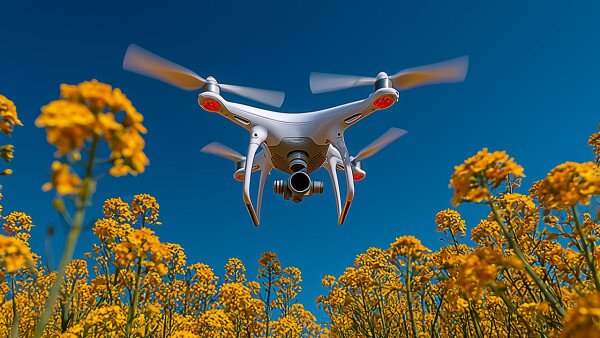
In recent years, unmanned aircraft (commonly known as drones) have become increasingly popular and have been applied practically across various industries. Consumer‑grade small unmanned aircraft (SUA) are also well received, used by some consumers to capture spectacular scenery as well as for educational purposes. With a wide array of models available on the market, consumers should note that improper operation or malfunction may cause injury to bystanders or damage to property, and may also affect aviation safety. Therefore, regardless of whether they are used for recreational or commercial purposes, SUA are regulated under the subsidiary legislation, the Small Unmanned Aircraft Order (SUA Order), under the Civil Aviation Ordinance.
The legislation regulates SUA operations under a risk-based approach which is classified according to the weight of the SUA and the operational risk level, covering registration of the product and operators, assessments, and operating requirements. However, after in-person visits to multiple physical shops selling SUA and browsing the websites of various retailers, the Consumer Council found that none of the physical shops displayed regulatory information on SUA. The staff at some points of sale, particularly retailers not specialising in SUA, were unable to clearly explain the relevant legal requirements. As a result, consumers often had to search for the information on their own.
The Council recommends the industry to strengthen training for frontline staff, and clearly display basic regulatory information in shops and on online product pages, so as to assist consumers in understanding the relevant requirements before making a purchase, thereby enabling them to make more appropriate purchasing decisions. In addition, consumers can visit the Civil Aviation Department’s (CAD) Electronic Portal for Small Unmanned Aircraft (eSUA) to learn about the various regulatory requirements for SUA and the latest boundaries of restricted flying zones, enabling safer and more enjoyable flying.
No Physical Shops Displayed Regulatory Information
Toy Shop Staff Showed Limited Knowledge
Earlier on, Council staff visited 17 physical shops selling SUA and browsed 14 retailer websites in the capacity of ordinary consumers. The retailers included SUA brand specialty stores, electronics retail chains, a department store and toy chain stores.
None of the physical shops displayed regulatory information on the SUA Order, whereas the level of understanding of the relevant requirements varied among staff of different types of shops. Staff of SUA brand specialty stores were generally more familiar with the regulations and were able to clearly explain that registration requirements depend on the aircraft’s weight. Some staff even introduced the registration procedures, reminded consumers of restricted flying zones, and demonstrated how to access relevant information on the CAD’s website.
Most staff of electronics retail chains were also able to point out that registration requirements are related to aircraft weight, and some reminded customers to pay attention to flight restrictions. However, individual staff members merely suggested that customers check the Government’s website on their own. Staff of 1 department store admitted being unfamiliar with the regulatory requirements. As for physical toy chain stores, staff of 1 shop stated being uncertain about the regulatory details, while staff of another shop even mistook that the SUA sold were merely toys and not subject to regulation, reflecting incorrect knowledge of relevant regulations.
As for online retailers, some electronics retail chains’ websites mentioned basic precautions for operating SUA, such as reminders about restricted flying zones and flight altitude. However, many other retail chains’ websites only reminded consumers to familiarise themselves with and comply with the relevant regulations on their own. On the webpage of 1 chain, no regulatory information was mentioned at all.
Information provided at points of sale is an important initial channel through which consumers learn about SUA regulations, and it also plays an important role in enhancing their awareness of aviation safety. Therefore, the Council recommends the industry to strengthen training for frontline staff to enhance their understanding of relevant local regulations. Physical shops and online product pages should also clearly display the most basic regulatory information or distribute leaflets, so as to help consumers understand registration and operational requirements before making appropriate purchasing decisions.
Classified by Weight and Operational Risk Level
Registration and Age Limits May Apply
To support the development of the low‑altitude economy, the SUA Order classifies SUA not exceeding 150kg into 4 categories according to weight, and sets out corresponding regulatory requirements based on different operational risk levels.
Currently, consumer‑grade SUA on the market generally weigh no more than 7kg and usually fall under Category A1 (not exceeding 250g) or Category A2 (exceeding 250g but not exceeding 7kg). Consumers should note that the weight of all items installed in, or attached to a SUA, such as batteries, cameras and lighting devices, must be included in the total weight.
Taking an individual model as an example, the manufacturer claimed that when a standard battery is installed, the aircraft weighs less than 249g, and thus falls under Category A1. However, if a long‑endurance battery is used instead, the manufacturer claimed that the aircraft weight will exceed 249g, and thus may be classified as Category A2 due to the increased actual weight, thereby being subject to stricter regulation compared with when a standard battery is used.
The mode of operation of SUA is also classified as “standard operations” or “advanced operations” according to the risk level. Under “standard operations”, Category A1 aircraft do not require registration or labelling. For Category A2, the responsible person (such as the owner), who must be aged 18 or above, shall register the aircraft on eSUA and affix the registration label issued by the CAD on the main body of the SUA. In addition, the aircraft must be equipped with flight log and geo-awareness functions. In the future, SUA insurance for third‑party liability (bodily injury and/or death) will also be required[1]. The remote pilot (operator) of a Category A2 SUA who must be aged 14 or above shall also register on eSUA.
“Standard Operations” Limited to Daylight Hours
Maintain Visual Line of Sight and Comply with Altitude and Other Requirements
Both “Standard Category A1 Operations” and “Standard Category A2 Operations” are only permitted during daylight hours, unless prior approval has been obtained from the CAD. When planning aerial photography activities, consumers can first check the sunrise and sunset times for the day on the Hong Kong Observatory website or mobile app to ensure that the operation time complies with the requirements.
To avoid collisions, operators must maintain direct visual line of sight with the SUA and the surrounding airspace throughout the entire flight, and comply with the relevant operational requirements on flight speed, altitude, etc. Under “standard operations”, the permitted maximum flight altitude and speed, etc. differ between Category A1 and Category A2 aircraft. “Standard Category A1 Operations” must not fly above 100 feet above ground level, and the speed must not exceed 20km/h. “Standard Category A2 Operations” must not fly above 300 feet above ground level, and the speed must not exceed 20km/h or 50km/h. The standard operations of SUA shall also comply with other corresponding operating requirements including the minimum horizontal distance from persons not participating in the flight, and buildings, vehicles or vessels not under the remote pilot’s control.
Choose Appropriate Flying Sites
Avoid Restricted Flying Zones
Operators should fly SUA at sites with flat terrain, clear visibility, and away from people and structures, so that the aircraft can take off, fly, return and land steadily under direct visual line of sight. SUA must not be flown within restricted flying zones unless prior approval has been obtained from the CAD. Before each flight, operators should check the Drone Map on eSUA to understand the latest designated restricted flying zones.
Operators should also pay attention to the requirements of various Government departments regarding unmanned aircraft operations. Under the Country Parks and Special Areas Regulations and the Marine Parks and Marine Reserves Regulation, unless approval has been obtained from the Agriculture, Fisheries and Conservation Department, no person shall operate any power‑driven model aeroplane in country parks and special areas, marine parks and marine reserves. Otherwise, it constitutes an offence. General propeller-driven unmanned aircraft are not subject to this restriction; however, members of the public should avoid causing disturbance to other visitors and wildlife when operating drones in the aforesaid areas.
For leisure venues under the Leisure and Cultural Services Department, the use of unmanned aircraft is generally prohibited for public safety reasons. However, to balance the needs of different users, the Department has implemented a pilot scheme for SUA activities at 5 venues for application by organisations[2].
Key points to note when operating SUA:
- Carefully inspect components for looseness or damage before flight, ensure normal operation and sufficient battery power for return; understand the maximum remote control range of the SUA and ensure that it remains within range throughout the flight;
- Automatic return‑to‑home (RTH) and obstacle‑avoidance functions of SUA may fail due to various factors. Therefore, operators must remain vigilant at all times and should not rely solely on these functions. In the event of an accident, the responsible person and operator should immediately report to the CAD;
- Do not modify the radiocommunications system of a SUA, as this may cause interference affecting the normal operation of other radio communication equipment and may contravene relevant provision(s) of the Telecommunications Ordinance. On conviction, offenders may be liable to a fine of $50,000 and imprisonment of 6 months;
- Avoid flying close to individuals or private premises, delete irrelevant recorded footage in a timely manner, and act as a responsible aerial photography operator to protect others’ personal data privacy;
- The SUA registration certificate is valid for up to 5 years, while the registration certificate of a remote pilot is valid for up to 3 years. Consumers should arrange renewal in a timely manner to avoid contravening regulatory requirements;
- When transferring ownership or disposing of a SUA, an application should be made to the CAD via eSUA to cancel the registration of the aircraft, and the registration label affixed to the aircraft should be removed.
Download the article (Chinese only): https://ccchoice.org/595-drones
Consumer Council reserves all its right (including copyright) in respect of CHOICE magazine and Online CHOICE.
[1] The Director‑General of Civil Aviation will announce in the Gazette a specified later date for the commencement of the mandatory insurance requirement for “Standard Category A2 Operations”. The relevant date has not yet been determined. Although insurance is not currently mandatory, the Civil Aviation Department encourages responsible persons and operators participating in “Standard Category A2 Operations” to take out insurance to provide protection against potential third‑party liabilities.
[2] The 5 venues available for applications by organisations to conduct SUA activities are: Mount Davis Service Reservoir Garden, Lok Fu Service Reservoir Rest Garden, Tai Tau Leng Playground (roller skating rinks), Lion Rock Park (baseball pitch), and Yuk Kwai Shan Service Reservoir Sitting-out Area.