


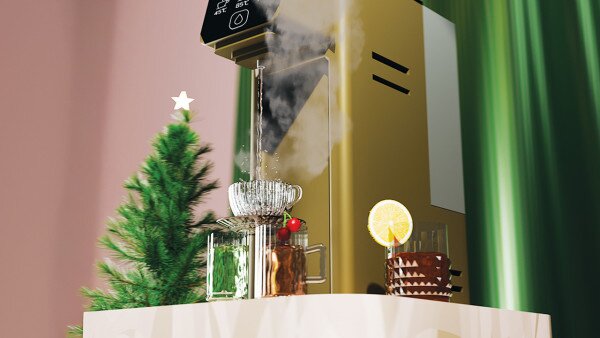
Tabletop water dispensers, which tout efficiency and convenience, have become popular appliances in many households and offices in recent years. In the Consumer Council’s test on 8 models of tabletop water dispensers, conducted in collaboration with the Electrical and Mechanical Services Department (EMSD), all models showed satisfactory safety performance and were able to supply hot water rapidly, with the initial hot water delivery time ranging from less than 1 second to 2.5 seconds. However, some models exhibited uneven water temperatures measured at the outlet (“outlet temperature”) when dispensing several cups of hot water consecutively. Excluding the first cup, 1 model showed an average temperature difference of up to 10.3°C among 3 cups of hot water, while 2 other models recorded maximum differences of more than 5°C. The Council reviewed the instruction manuals of the models and noted inconsistencies in the methods used to measure the highest water temperature among models. Manufacturers and agents are recommended to clearly state the measurement position and outlet temperature on product packaging, websites, promotional leaflets and instruction manuals to assist consumers in making informed choices.
The 8 tabletop water dispenser models offered between 4 and 62 water temperature options, with rated tank capacities ranging from 2.5L to 6L. Prices for models without filtration function ranged from $749 to $1,980, while those with filtration ranged from $2,588 to $6,488. The test covered the initial hot water delivery time, temperature uniformity, heating efficiency, capacity accuracy and standby energy consumption, while the ease of use was also assessed. EMSD tested the safety performance of the models. Safety tests adopted the international IEC 60335 series standards, while performance tests simulated daily use and referenced the Mainland’s light industry recommended standard QB/T 4098 and the United States (US) ENERGY STAR water cooler test method.
Safety is a fundamental requirement for tabletop water dispensers. All 8 models passed tests on protection against access to live parts, temperature rise, insulation and construction, etc. However, 2 models required improvement in labelling, such as unclear earthing terminal marks or missing indications of climate class.
Temperature Uniformity of Hot Water Varied
1 Model Recorded Maximum Temperature Difference of 10.3°C
Many consumers expect tabletop water dispensers to deliver hot water at the desired temperature quickly, and uniform temperature could help achieve the intended flavour of beverages and food. All models demonstrated very fast initial hot water output, ranging from less than 1 second to 2.5 seconds, with 6 models taking no more than 1 second. The laboratory also set each model to its highest selectable temperature and dispensed several cups of approximately 250ml hot water consecutively, measuring the water temperature at the outlet. The test was conducted twice, and the average was used for assessment. Some models were measured with uneven water temperatures at the outlet during consecutive dispensing. Excluding the first cup with a lower average temperature, the subsequent 3 cups of the same model still varied, with the maximum outlet temperature difference of 1 model being 10.3°C, and that of 2 others exceeding 5°C, indicating uneven performance.
Satisfactory Heating Efficiency
Tank Capacity Deviated by 8%
The efficiency test was conducted with reference to the US ENERGY STAR water cooler test method, calculating the heating efficiency of the models based on the energy consumption, output volume and temperature measured during 2 hot water tests. The average heating efficiency of the 8 models ranged from 85.6% to 91.9%, showing overall satisfactory performance. Standby energy consumption was measured over 1 day with only the hot water function activated and other functions (such as cold water or network connection) disabled. The results ranged from 8Wh to 109.5Wh.
When the temperature was set to the highest and the output volume was set to 250ml or the closest available setting, most models delivered volumes close to the setting, performing well. However, 1 model showed significant variance, dispensing 23.4ml (about 9.4%) more than set, which could cause hot water to overflow from the container. Regarding tank capacity, all measured values were lower than stated, with discrepancies ranging from 0.2% to 8%. Consumers who value capacity should pay extra attention.
Measured Hot Water Temperature Differed from Displayed Maximum
To provide additional information for consumers, the test also measured the average outlet temperature of several cups of hot water dispensed at the highest setting and compared it against the displayed maximum water temperature. However, as the measurement methods and positions for the displayed maximum temperature varied among models, which may differ from the Council’s test method (e.g. some models indicated “internal” water temperature), the comparison is for reference only and not included in the scoring.
Consumers should note that at the highest temperature setting, the first cup’s average temperature for all models was found to be lower than the subsequent 3 cups, whereas the average measured outlet temperature of these 3 cups also differed from the displayed maximum by up to 7.7°C. Such temperature differences may affect the flavour or texture of the food or beverages being prepared, especially instant noodles or drip coffee which require high water temperatures for brewing. Consumers who prioritise brewing results are advised to separately retain the first portion of hot water for other purposes, and reserve the subsequent water with higher temperatures for brewing.
To avoid product performance falling short of consumer expectations, the Council recommends manufacturers and agents improve measurement methods of the displayed temperature and clearly state detailed information on the packaging, websites, promotional leaflets and instruction manuals, including the measurement position and actual outlet temperature, so as to facilitate comparison.
Some Models Featured Cold Water and Filtration Functions
Over Half Required More than 45 Minutes for Cooling
In addition to basic hot water functions, 5 of the 8 models offered cold water dispensing functions, with varying rated cold water temperatures, cooling tank capacities and output volumes. 4 models also featured filtration using reverse osmosis technology. The laboratory tested these additional functions, but as the cold water designs of the 5 models varied, while 1 model could not undergo filtration testing due to its design, the results of both of these tests were not considered in the final score.
Cold water performance tests simulated daily use and referenced the US ENERGY STAR method, conducted twice and averaged. Comparing the first cooling time with the subsequent 3, all models took longer initially (14.4 minutes to 81.2 minutes) than the 3 subsequent times (9.7 minutes to 58.9 minutes), with over half requiring more than 45 minutes for cooling. Average cold water temperatures (excluding the first cup) ranged from about 5.5°C to 17.3°C.
Filtration tests for lead and copper removal referenced the US NSF/ANSI 53 and NSF/ANSI 58 standards. 1 model automatically stopped operation upon detecting poor water quality in the tank, so testing could not be conducted. The remaining 3 models performed well in filtering lead and copper, maintaining removal rates above 95% even when filtering “test water” to 120% of the rated capacity (about 2,400L). As filtering performance declines over time, users should replace filters regularly according to the indicator light. Based on a family of four’s water consumption and rated filtration capacity, total filter replacement costs for the first 3 years were estimated to range from $1,317 to $6,998 among models. These recurring costs should be considered when purchasing.
Consumer Tips for Selecting and Using Tabletop Water Dispensers:
- Check whether the water temperature and volume options suit your drinking habits, confirm tank capacity meets daily needs, and ensure sufficient space for placement;
- Water dispensers have a higher input power when heating water and should avoid sharing sockets with other high-power consumption electrical appliances;
- Check for automatic cleaning functions and ease of removing and cleaning the tank or drip tray;
- Follow instructions for use and maintenance, such as descaling;
- Switch off the appliance, empty the tank and filtered water jug when not in use for extended periods;
- For models with reverse osmosis filtration, note that wastewater is generated and discharged into the tank during filtration. When the low-water indicator lights up, discard the wastewater before refilling the tank.
Download the article (Chinese only): https://ccchoice.org/590-water
Consumer Council reserves all its right (including copyright) in respect of CHOICE magazine and Online CHOICE.